
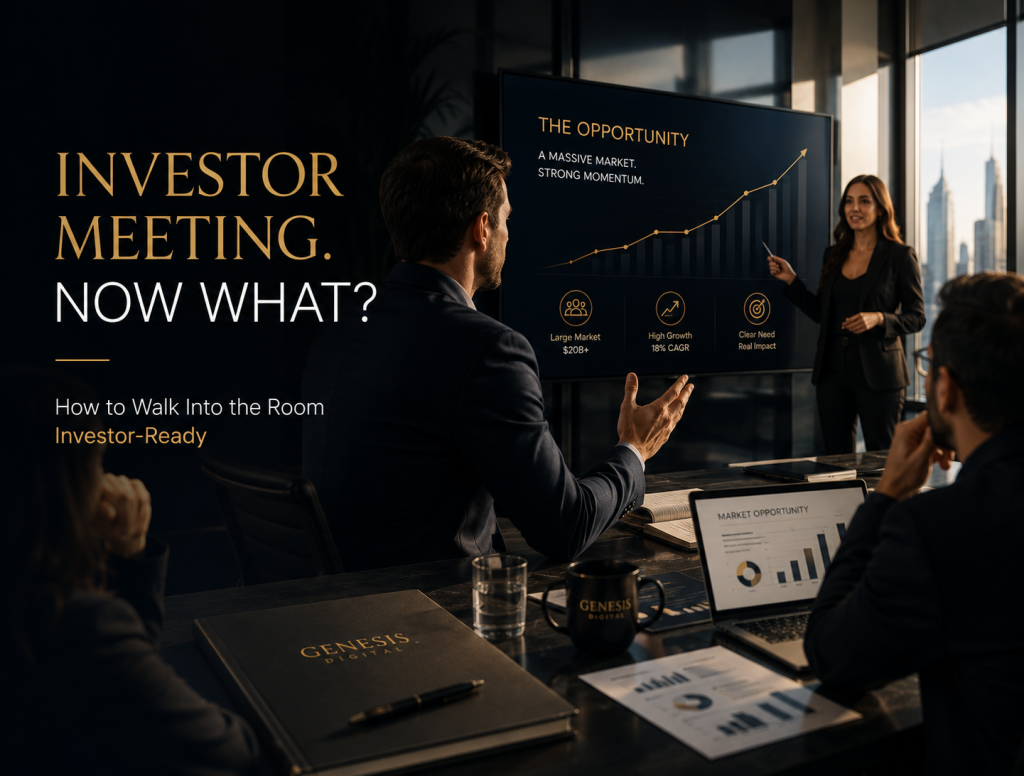
How to walk into the room ready for the opportunity
Getting the meeting is a win. But it is also the moment when preparation suddenly becomes very real.
A warm introduction, a conference conversation, or the right email can put a founder in front of an investor who could change the direction of the company. Once that happens, the question is no longer, “How do we get in the room?” It becomes, “What will they see when we get there?”
Investor readiness is not about arriving with the thickest deck or the most polished buzzwords. It is about making the company easy to understand, easy to remember, and easy to take seriously.
The best place to start is clarity. Y Combinator’s guide to pitching a company makes a simple point that founders often overlook: explain what the company does in the simplest language possible. The goal is not to tell an investor everything in the first few minutes. It is to give them enough clarity to want the next question.
That sounds easy until you have spent three years living inside a product. Founders know every feature, every technical advantage, every market possibility and every obstacle they have overcome. Naturally, they want to share all of it. The investor, however, is meeting the company for the first time.
A good investor story creates a path. What is the problem? Why does it matter? What have you built? Why is your solution different? Who wants it? How large could the opportunity become? Why is your team positioned to make it happen?
Then the materials need to support that story. The deck, website, video, product imagery, executive summary, market data and founder profiles should feel as though they belong to the same company. If an investor receives the deck after the meeting, visits the website that evening and watches the video the following morning, the experience should become stronger at every step.
This is especially important because the person you meet may not be the only person evaluating the opportunity. Your materials can travel to partners, advisers and other decision-makers. You may not be in the room when they do.
That is why we like one question before building any investor material: if the investor remembers only a few things tomorrow morning, what absolutely needs to be on that list? Y Combinator’s pitch-deck guidance recommends identifying the five to seven most important ideas people should remember. It is a useful discipline because it forces a company to choose what matters instead of trying to say everything.
At Genesis Digital, this is where investor readiness begins. We help companies turn complex information into a clear investment story, then build the presentation, video, website, branding and digital materials around it.
Getting the meeting opens the door. Being ready gives you a much better chance of keeping it open.